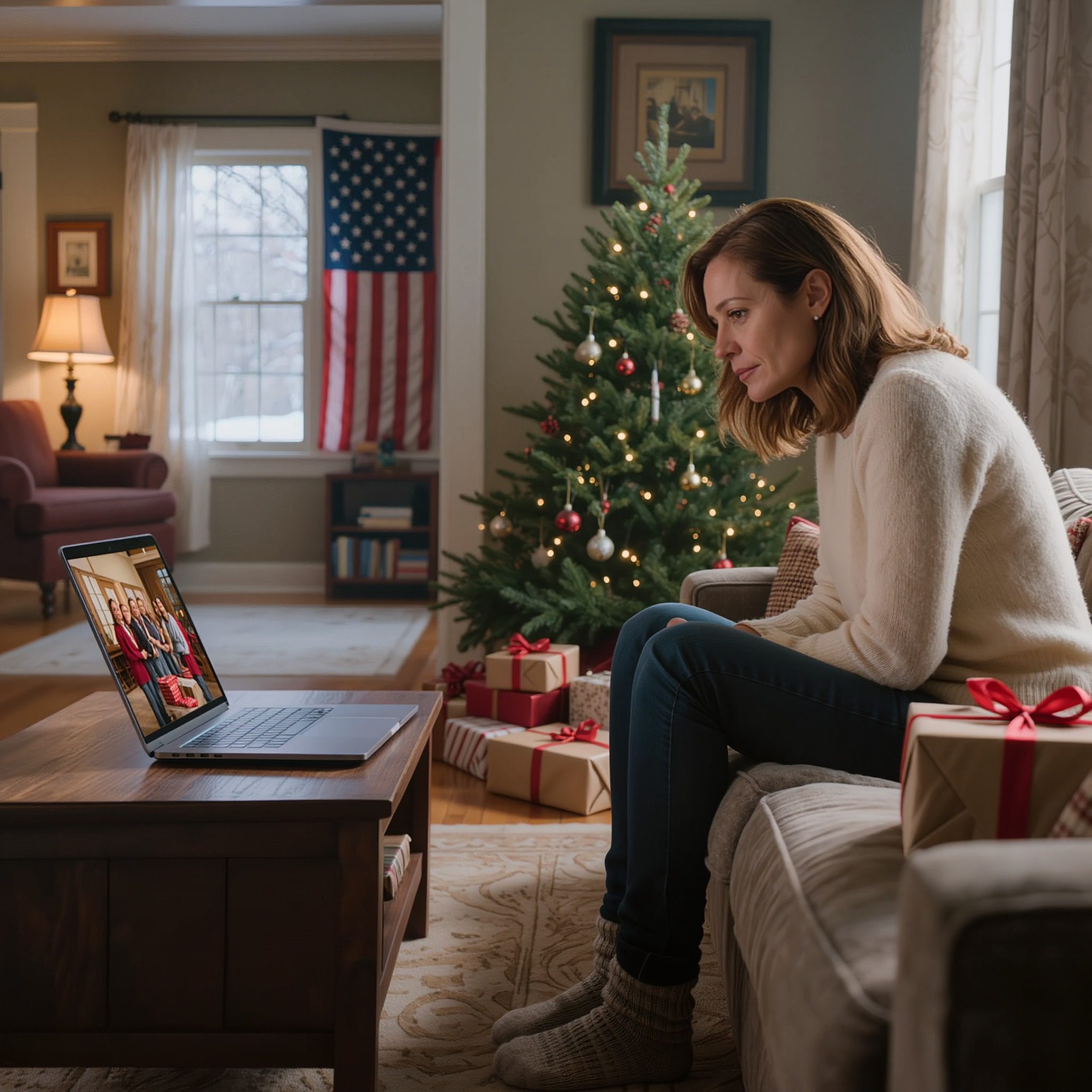
I stared at my phone, sitting in my apartment in Nashville, Tennessee, feeling the familiar sting of disappointment settle in my chest. It was Christmas Eve, and I had been looking forward to being with my family for weeks. The snow had been falling steadily all day, but it didn’t seem that bad. Still, if Mom said it was unsafe, I trusted her judgment.
My name is Millie. I’m twenty-nine years old, and I’ve spent most of my adult life trying to earn a place in my family that I’m not sure I’ll ever really have. I work as a physical therapist at a rehabilitation center, and while I love my job, it doesn’t come with the prestige or the paycheck that my younger sister Vanessa’s career as a pharmaceutical sales representative does. She’s always been the favorite, the one who could do no wrong, the golden child who made our parents proud just by existing.
I replied to Mom’s text.
“That’s too bad. Stay warm, everyone. Love you all.”
My apartment felt emptier than usual that night. I had bought presents for everyone—thoughtful gifts I had spent weeks selecting. A cashmere scarf for Mom because she was always complaining about the cold. A nice leather wallet for Dad because his old one was falling apart. And for Vanessa, a beautiful set of art supplies because she used to paint before her career consumed all her time. They were wrapped and sitting under my small Christmas tree, ready to be delivered tomorrow.
I made myself a simple dinner—nothing fancy, just pasta with marinara sauce—and settled on the couch with a holiday movie. The apartment was quiet except for the sound of the television and the occasional gust of wind rattling the windows. I kept telling myself it was fine, that family dinners could be rescheduled, that there would be other Christmases. But deep down, I felt the old familiar ache of being left out, of being the afterthought.
Around nine, I scrolled through social media, mostly out of boredom.
That’s when I saw it.
A photo posted by my cousin Janet, who I knew was close with Vanessa. The image showed my entire family gathered in what I immediately recognized as Vanessa’s living room. There was the distinctive brick fireplace, the expensive furniture she had just bought, and the chandelier I had heard so much about. My parents were there, beaming. My aunts and uncles were there. Even my grandmother’s sister, Aunt Louise, was there, and they were opening presents.
My heart stopped.
I zoomed in on the photo, my hands shaking. There were piles of beautifully wrapped gifts, champagne glasses in everyone’s hands, and smiles all around. The caption read:
“Perfect holiday with the family. So blessed.”
I felt like I had been punched in the stomach. They hadn’t canceled Christmas because of bad weather. They had canceled it for me. They had lied to keep me away, and they were all together at Vanessa’s house, celebrating without me.
I sat there in shock, staring at the photo. Why would they do this? What had I done to deserve being excluded from my own family’s Christmas celebration? The hurt quickly turned to anger, then to something colder—a determination to understand what was really going on.
I noticed something else in the photo. On the coffee table, among the opened presents, were several items that looked expensive and antique: a jewelry box I recognized, a set of silver candlesticks, and what appeared to be some old photographs in ornate frames.
My breath caught in my throat.
Those were Grandma’s things.
My grandmother had passed away six months ago, and she had been the one person in the family who always made me feel valued. She had left behind a small estate, mostly personal items and keepsakes she had collected over her lifetime. The will had been read, but I hadn’t been present because I was out of town for a work conference. Mom had told me that Grandma had left everything to be divided equally among the grandchildren, and that we would sort through it all together after the holidays.
But looking at this photo, it was clear that sorting had already begun without me.
I took a screenshot of the photo and saved it to my phone. Then I replied to Mom’s text with a message that took every ounce of self-control I had to write calmly.
“Glad you’re all safe. Hope the weather clears up soon.”
I didn’t sleep that night. I lay in bed staring at the ceiling, my mind racing. The exclusion was one thing, but the inheritance issue was something else entirely. If they had divided Grandma’s belongings without me, that wasn’t just hurtful. It was potentially illegal. Grandma’s will had been specific about equal distribution among grandchildren. I had a copy of it in my files somewhere.
By the time morning came, I had made a decision. I wasn’t going to confront them immediately. I was going to be smart about this. I was going to find out exactly what they had done, and then I was going to make sure they faced the consequences.
Christmas morning arrived with pale winter sunlight filtering through my curtains. I got up, made coffee, and started doing what I should have done months ago.
I began investigating.
First, I pulled out the copy of Grandma’s will that her lawyer had sent me. I read through it carefully, highlighting the relevant sections. It was clear her estate was to be divided equally among her four grandchildren—me, Vanessa, and our two cousins, Janet and Stuart. The executor was supposed to be a neutral third party, a lawyer named Patricia Hoffman. But I noticed that my mother had been listed as a co-executor to help with the personal items since she knew what everything was.
I had trusted Mom to handle things fairly.
That had clearly been a mistake.
I thought back to my childhood, trying to pinpoint when things had started to go wrong between Vanessa and me. We had been close once, when we were little. I remembered playing together, sharing secrets, defending each other against the world. But somewhere around the time Vanessa turned sixteen and I was eighteen, everything changed. She became competitive, always trying to outdo me, always seeking more attention from our parents—and they gave it to her willingly.
When I chose to study physical therapy, Dad had made comments about it being a nice, practical career for someone who wanted to help people. But when Vanessa went into pharmaceutical sales, he bragged about her ambition and her six-figure income potential. When I bought my modest apartment, Mom said it was “cozy.” When Vanessa bought her house with the chandelier and the brick fireplace, they threw her a housewarming party and invited half the neighborhood.
I had tried not to be bitter about it. I had tried to focus on my own life, my own achievements, my own happiness. But it was hard when every family gathering felt like a celebration of Vanessa and a reminder of my own inadequacy in their eyes.
Grandma had been different. She had always treated us equally, always made sure we both felt loved and valued. When I graduated from my physical therapy program, she was the one who threw me a party. When I got my first job, she was the one who sent me a congratulatory card with a check inside and a note that said she was proud of me. She never compared us, never played favorites, never made me feel less than.
That’s why her will had specified equal distribution. She wanted us to be treated fairly even after she was gone.
And Mom and Vanessa had violated that.
I decided to call Aunt Louise, Grandma’s sister. She was in her seventies but sharp as a tack, and she had always been kind to me. If anyone would tell me the truth about what was going on, it would be her.
“Millie, dear,” she answered, her voice warm. “Merry Christmas. I’m so sorry you couldn’t make it yesterday. The weather was frightful, wasn’t it?”
I felt a spike of anger but kept my voice calm.
“Actually, Aunt Louise, I’d love to talk to you about that—and about Grandma’s estate. Do you have a few minutes?”
There was a pause.
“Of course, sweetheart. What’s on your mind?”
“I saw photos from yesterday’s gathering at Vanessa’s house. It looked like some of Grandma’s things were being distributed. I was under the impression that we were all supposed to go through everything together after the holidays, with the executor present. What changed?”
Another pause—longer this time.
“Oh, Millie, I thought you knew about the change in plans. Your mother said you had agreed to let Vanessa handle most of the distribution since you were so busy with work.”
My grip tightened on the phone.
“I never agreed to that. I was never even asked.”
Aunt Louise’s voice became concerned.
“That’s very strange. Your mother was quite clear about it. She said you had specifically told her that you didn’t have time to deal with sorting through old keepsakes and that Vanessa could take care of it. She said you would just accept whatever was set aside for you.”
“That’s not true,” I said, my voice shaking now. “I never said any of that. In fact, I specifically asked Mom when we would all get together to go through Grandma’s things. She told me it would be after the holidays and everyone would be involved.”
There was a long silence on the other end of the line. Finally, Aunt Louise spoke, and her voice was troubled.